
Anti-inflammatory vegan eating isn’t about avoiding food.
Many assume it means eliminating certain ingredients or adhering to strict food rules. In practice, the focus shifts to foods that place less stress on the body and support recovery over time.
Inflammation is a useful response from your immune system.
You eliminate toxins and germs, remove dead cells, and heal and restore the body.
When your body is under constant stress, this positive action turns negative and extends to healthy tissues.
Chronic inflammation develops over time. You may notice stiffer joints, digestive issues, or changing energy levels. These changes are often linked to long-term eating patterns along with lifestyle choices.
A well-planned vegan diet supports inflammatory balance in a positive way.
Whole plant foods provide fiber, antioxidants, and bioactive compounds that help regulate immune responses and oxidative stress. When you create and eat such meals, the body stabilizes. Digestion becomes more predictable. Energy dips are less sharp and less frequent.
That’s why anti-inflammatory vegan meals shouldn’t feel extreme.
They are meals with normal foods you can return to without effort.
🌱 Your Gut Influences Inflammation
Gut health plays a bigger role in inflammation than many people expect.
The gut lining and gut bacteria interact closely with the immune system. When this system is under strain, inflammatory signals increase. Over time, you may feel this as bloating, irregular digestion, pain and aches, or a general sense of physical or mental unease.
Low fiber intake is a common reason.
Without enough fiber, beneficial gut bacteria decline. This changes how the immune system responds to everyday stressors and triggers inflammation.
Whole plant foods help by restoring balance.
Fiber feeds beneficial bacteria. Those bacteria support the gut lining and help regulate inflammation throughout the body. Higher fiber intake is linked to lower C-reactive protein (CRP), a marker used to track chronic inflammation.
This is a gradual process, which is why regular meals matter more than occasional “healthy days.”
Supportive foods include:
- Lentils, beans, and chickpeas
- Whole grains such as oats, barley, and millets
- Vegetables like carrots, squash, gourds, and leafy greens
Study link: https://pubmed.ncbi.nlm.nih.gov/33303765
Raw Zucchini Roll Ups

Prep Time 10 mins Cook Time 0 mins 2 servings
Ingredients:
- 2 large green or yellow zucchini, sliced
- ½ cup roasted sunflower seeds
- ½ tsp salt
- 1 cup plain or fire-roasted tomatoes, finely chopped
- 1 tsp olive oil
- 1 cup finely chopped mixed vegetables
- A handful of finely chopped arugula or baby spinach
- 1 tbsp BBQ or Creole seasoning
- ½ cup soy or hot sauce
DIrectIons:
- Blend sunflower seeds with oil and a little water in a blender to a smooth paste
- Toss vegetables, greens and tomatoes with salt and seasoning in a large bowl.
- Cut zucchini into ¼-inch thick, long slices using a mandoline or box grater.
- Place 2 zucchini slices together and top with 2 tablespoons of veggie mixture.
- Spread one teaspoon of sunflower paste.
- Tightly roll the slice and secure with a toothpick. Prepare remaining rolls.
- Drizzle sauce and serve immediately
🌱 Stable Blood Sugar Helps Calm Inflammatory Responses
Blood sugar affects more than energy.
When meals cause repeated spikes and crashes, the body stays stressed longer than it should. Over time, this contributes to inflammation, particularly in muscles, joints, and connective tissue.
You may notice this as post-meal fatigue or slower recovery.
Balanced vegan meals help smooth these swings.
Meals that combine fiber-rich carbs with plant protein and modest fat take time to digest. These whole-food vegan diets improve insulin sensitivity and reduce inflammatory markers without calorie restriction.
This matters as you age with changes in insulin sensitivity.
Supportive patterns include:
- Root vegetables paired with legumes
- Whole grains eaten with beans or tofu
- Vegetable-forward meals with grains and protein
Study link: https://pmc.ncbi.nlm.nih.gov/articles/PMC9736284/
🌱 Antioxidants Reduce Oxidative Stress
Oxidative stress and inflammation often rise together.
When antioxidant intake is low, everyday cellular stress accumulates. The immune system responds with inflammation, even in the absence of injury or illness.
Plant foods naturally interrupt this cycle. Higher intake of antioxidant-rich plant foods is associated with lower inflammatory markers and better metabolic health.
Different plants support different pathways. They provide a wide range of antioxidant compounds that help limit oxidative damage before it triggers prolonged inflammation.
You don’t need special food. Adding diverse plant foods to your daily vegan plate works better.
Helpful sources include:
- Leafy greens and colorful vegetables
- Fruits such as berries, citrus, papaya, and guava
- Herbs and spices used in everyday cooking
Study link: https://pubmed.ncbi.nlm.nih.gov/19685439/
Tropical Green Power Smoothie

Prep Time 5 mins Cook Time 0 mins 2 servings
Ingredients:
- ½ cup roughly chopped spinach
- ½ cup pineapple or mango slices
- 1 cup unsweetened almond or soy milk
- 1 tbsp peanut butter
- ½ cup banana or papaya slices
DIrectIons:
- Combine all the ingredients in a blend and blender until smooth.
- Serve immediately.
🌱 Dietary Fat Quality Influences Inflammation
Fat quality matters more than most people realize.
Some research links higher intakes of saturated fats with promoting cell and tissue damage, while certain unsaturated fats — especially omega-3s in seeds — show anti-inflammatory effects.
While your dietary pattern and fat balance matter, the kind of fats you eat and how they’re used in meals matter.
Whole-food vegan diets naturally keep saturated fat lower while focusing on fats that support lower toxin buildup in your body. This balance reduces unnecessary inflammatory activity and cardiovascular risk.
Supportive fat sources include:
- Nuts and seeds (used moderately)
- Ground seeds such as flax and chia
- Naturally occurring fats within whole plant foods
These fats work best as part of a meal.
Study link: https://pubmed.ncbi.nlm.nih.gov/24476102/
Raw Chia Porridge
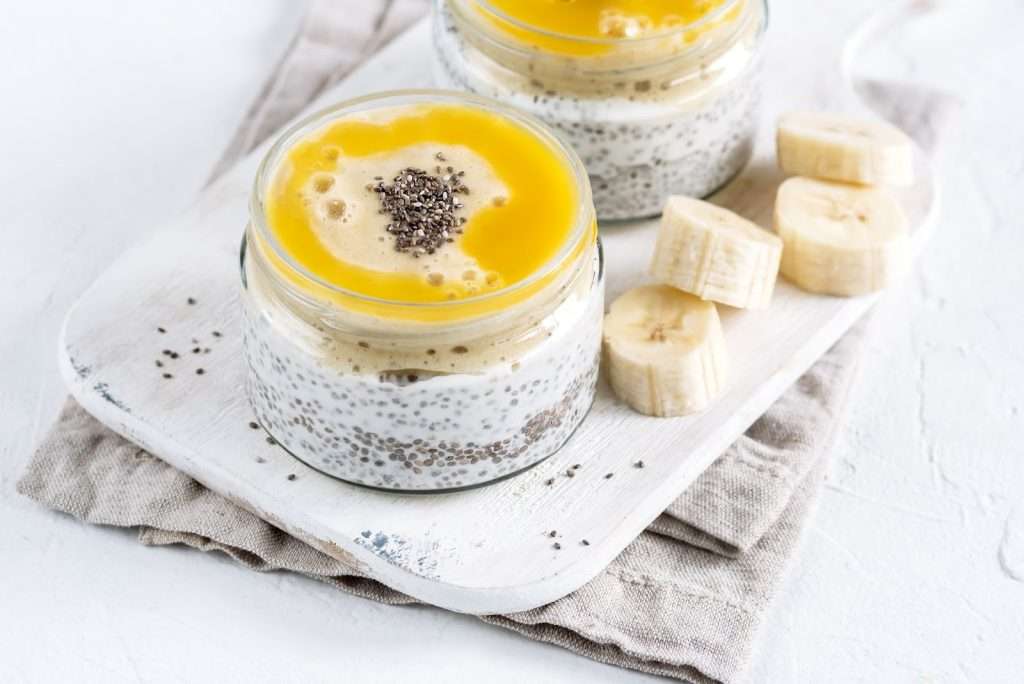
Prep Time 10 mins Chill Time 8-12 hours 2 servings
Ingredients:
- 1½ cup soy milk or coconut yogurt
- ¼ cup almond butter
- 1 tbsp date syrup
- 1 tsp pumpkin spice
- ¼ cup papaya or sweet pumpkin puree
- 4 tbsp chia seeds
- ½ cup water
- ½ cup raw walnuts or pine nuts chopped
DIrectIons:
- Add chia seeds to a bowl. Add water and soak for 10 minutes.
- Add milk, date syrup, and pumpkin spice and stir until it gets jelly like consistency.
- Pour into 4 jars and store in the fridge overnight.
- Add nut butter, papaya puree and chopped nuts before serving.
- Top with roasted seeds if desired.
🌱 How Common Anti-Inflammatory Foods Support These Processes
They reduce oxidative stress when eaten regularly.
Some foods support more than one system at the same time, and figure in anti-inflammatory vegan eating.
They don’t work as cures.
They help lower overall inflammatory load when eaten regularly, as part of everyday meals.
🌿 Turmeric and Inflammatory Signaling
Turmeric supports inflammatory balance when used regularly in cooking. Curcumin, the main compound in turmeric, blocks inflammatory molecules linked to joint and metabolic stress.
Fiber-rich foods and small amounts of fat improve its absorption.
Study link: https://pubmed.ncbi.nlm.nih.gov/17569207/
🥬 Leafy Greens and Cellular Protection
Leafy greens support gut health, vascular function, and antioxidant intake.
Their fiber and micronutrients help reduce ongoing oxidative stress.
Because they’re low in energy density, they’re easy to eat consistently.
Study link: https://pubmed.ncbi.nlm.nih.gov/29931038/
🍓 Berries and Oxidative Stress Regulation
Berries help reduce oxidative stress through their polyphenol content. Anthocyanin-rich foods provide fiber with natural sweetness. Their polyphenols modulate gut microbiota and limit blood sugar disruption.
Eat them every day, but in moderate quantities.
Study link: https://pubmed.ncbi.nlm.nih.gov/24512603/
🌱 Other Foods That Fit This Pattern
Garlic, onions, ginger, legumes, whole grains, nuts, seeds, cruciferous vegetables, and seasonal produce support the same processes.
These foods help with gut health, antioxidant defense, and metabolic stability.
These foods work because they fit easily into meals you already eat.
No special timing.
No large quantities.
Just consistency.
Study link: https://pubmed.ncbi.nlm.nih.gov/36662358/
🌱 The Anti-Inflammatory Vegan Plate
Rather than focusing on restriction, anti-inflammatory eating works best when meals follow a balanced, repeatable structure:
- ½ plate vegetables (especially leafy greens and colorful varieties)
- ¼ plate legumes (lentils, beans, chickpeas)
- ¼ plate whole grains or root vegetables
- Small amounts of healthy fats from nuts and seeds
This structure limits inflammatory triggers without eliminating entire food groups.
🌱 Why This Approach Is Especially Helpful With Age
Inflammation tends to increase with age, while recovery slows. Diet becomes one of the few daily tools that remains flexible and accessible.
Anti-inflammatory vegan meals help support:
- Joint health
- Digestive resilience
- Energy stability
- Long-term metabolic balance
Most importantly, this approach is sustainable. You don’t need mere willpower to maintain it.
Want Practical Anti-Inflammatory Vegan Meals?If you’re looking for simple, senior-friendly vegan meals that follow this approach, the Vegan Senior Cookbook Bundle was created with this exact structure in mind.