
| 31g
top protein |
9.2g
top fiber |
7 min
fastest snack |
Yes
all gluten-free* |
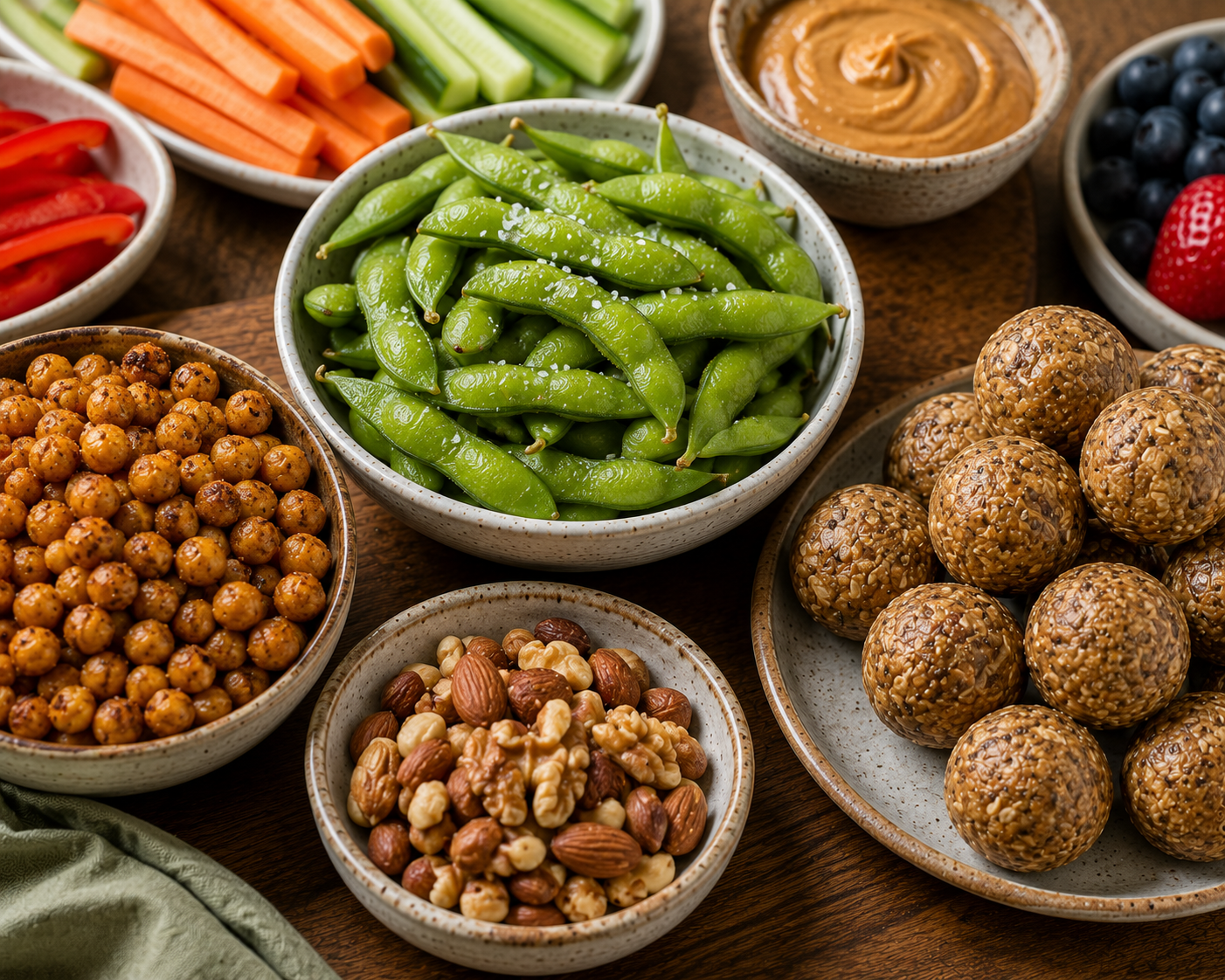
The average snack delivers 3–5 grams of protein. These three snacks deliver 7–31 grams. That difference matters because protein at snack time extends satiety, stabilizes blood sugar between meals, and contributes to the daily protein total that most people — plant-based eaters in particular — find challenging to hit consistently.
All three are whole-food by design: no protein powder, no processed protein bar, no ingredient you can’t identify by sight. Real food, real protein, real convenience.
Nutty Oats Granola Parfait
| 31g
protein |
11g
fiber |
$1.45
cost/serving |
7 min
time |
Ingredients
- 1 cup vegan yogurt
- 1/2 cup rolled oats (certified gluten-free if needed)
- 2 tablespoons mixed nuts (almonds, walnuts, cashews)
- 2 tablespoons mixed seeds (pumpkin, sunflower, chia)
- 1/4 teaspoon cinnamon
- 1/4 cup cranberries
Instructions
- Combine oats, mixed nuts, and mixed seeds in a small saucepan. Toast over low heat for 5 minutes, stirring occasionally.
- Remove from heat and let cool 2–3 minutes.
- Stir cinnamon into the vegan yogurt. Mix in half the cooled granola.
- Divide between two glasses or bowls.
- Top with remaining granola and cranberries.
- Serve immediately.
| Tested note:
31g of protein from a 7-minute snack is a genuinely unusual result. The protein comes from three simultaneous sources: the vegan yogurt base, the nuts, and the seeds — none of which alone would reach this number, but which stack to produce a protein count that exceeds most lunch portions. This also works as a breakfast, a dessert, or a meal replacement on days when cooking a full meal isn’t possible. |
Hummus with Veggies (Beet and Turmeric Versions)
| 9.3g
protein |
9.2g
fiber |
$0.95
cost/serving |
20 min
time |
Ingredients
- For Turmeric Hummus: 1/2 cup canned chickpeas, 1 tsp turmeric, 2 tbsp lemon juice, 1 tbsp tahini, 1/2 tsp salt
- For Beet Hummus: 2 medium beets (steamed 15 min), 1/2 cup canned chickpeas, 2 tbsp lemon juice, 2 tbsp tahini, 1/2 tsp salt
- To serve: 1 cup carrot sticks, 1 cup cucumber sticks, 1 cup radish cubes, 1 cup cherry tomatoes
Instructions
- Make the Beet Hummus: steam the beets for 15 minutes until tender. Cool, peel, and blend with the chickpeas, lemon juice, tahini, and salt until smooth.
- Make the Turmeric Hummus: in the same blender, combine chickpeas, turmeric, lemon juice, tahini, and salt. Blend until smooth.
- Prepare the vegetables into sticks and cubes.
- Serve both hummus varieties in separate bowls alongside the prepared vegetables.
- Drizzle with olive oil if desired.
| Tested note:
Offering two hummus varieties side by side — one golden from turmeric, one deep pink from beets — turns a straightforward snack into something visually striking. The beet hummus has an earthier, slightly sweeter flavor than standard chickpea hummus; the turmeric hummus is brighter and more savory with a subtle warmth. Having two options also increases the likelihood that different people at the table will find something they prefer, which matters for the family snack context. |
Buckwheat Cutlets
| 7.2g
protein |
7g
fiber |
$1.10
cost/serving |
10 min
time |
Ingredients
- 3/4 cup buckwheat flour (plus 1/4 cup set aside for coating)
- 1 cup bell pepper, finely chopped
- 1 cup cabbage, grated
- 1/2 teaspoon garlic powder
- 1/2 teaspoon ginger powder
- 1 tablespoon ground chia seeds
- 1 tablespoon almond butter
- 1 teaspoon salt
- 1 tablespoon zaatar seasoning
- 2 tablespoons fresh herbs, chopped (parsley, cilantro, or chives)
- Water for mixing
- 2–3 tablespoons cooking oil
Instructions
- Finely chop the herbs and bell pepper. Grate the cabbage.
- In a mixing bowl, combine 3/4 cup buckwheat flour, bell pepper, cabbage, garlic powder, ginger powder, chia seeds, almond butter, salt, zaatar, and herbs.
- Add water gradually, a tablespoon at a time, mixing until the batter holds together when pressed — it should be firm enough to shape.
- Form the mixture into small patties about 1.5 inches across and 1/2 inch thick.
- Coat each patty lightly in the reserved buckwheat flour.
- Heat oil in a pan over medium heat. Cook the cutlets for 3–4 minutes per side until golden and crunchy on the exterior.
- Serve immediately with hummus or a dipping sauce of your choice.
| Tested note:
Zaatar is the spice blend doing the distinctive work here — a Middle Eastern mix of dried thyme, sesame seeds, sumac, and salt that gives the cutlets an herby, nutty, slightly tangy flavor that stands up to the earthiness of the buckwheat. If zaatar is not available, substitute equal parts dried thyme and sesame seeds with a squeeze of lemon juice and the result is similar. The key to a good crust is making sure the oil is hot before the cutlets go in. |
| Fun fact:
Buckwheat, despite its name, is not a form of wheat and contains no gluten — it is more closely related to rhubarb and sorrel than to any grain. It was one of the first crops cultivated in Southeast Asia approximately 6,000 years ago. Its flour has a distinctively earthy, slightly bitter flavor that works particularly well in savory preparations, which is why it is used in Japanese soba noodles, Eastern European blini, and this recipe. |
Building a Complete High-Protein Snack Rotation
These three snacks, used in rotation with the Roasted Fava Beans (11g protein) and Roasted Sriracha Green Peas (4.8g protein) from Article 14, give you five distinct high-protein whole-food snacks to cycle through the week. At an average of 12–13g of protein per snack, two snacks per day contribute 24–26g toward your daily protein target — a meaningful contribution from what is often the most nutritionally neglected meal period.
| From the cookbook:
These snacks are drawn from the Healthy Vegan Cookbook and Vegan Diet Cookbook in the full cookbook bundle. For the complete Snack Cookbook with 50+ whole-food plant-based snack recipes see the full cookbook series. [Get the cookbook bundle] |