
| Yes
all anti-inflammatory |
Yes
all gluten-free |
Yes
all under 15 min |
$1.00–1.40
cost range |
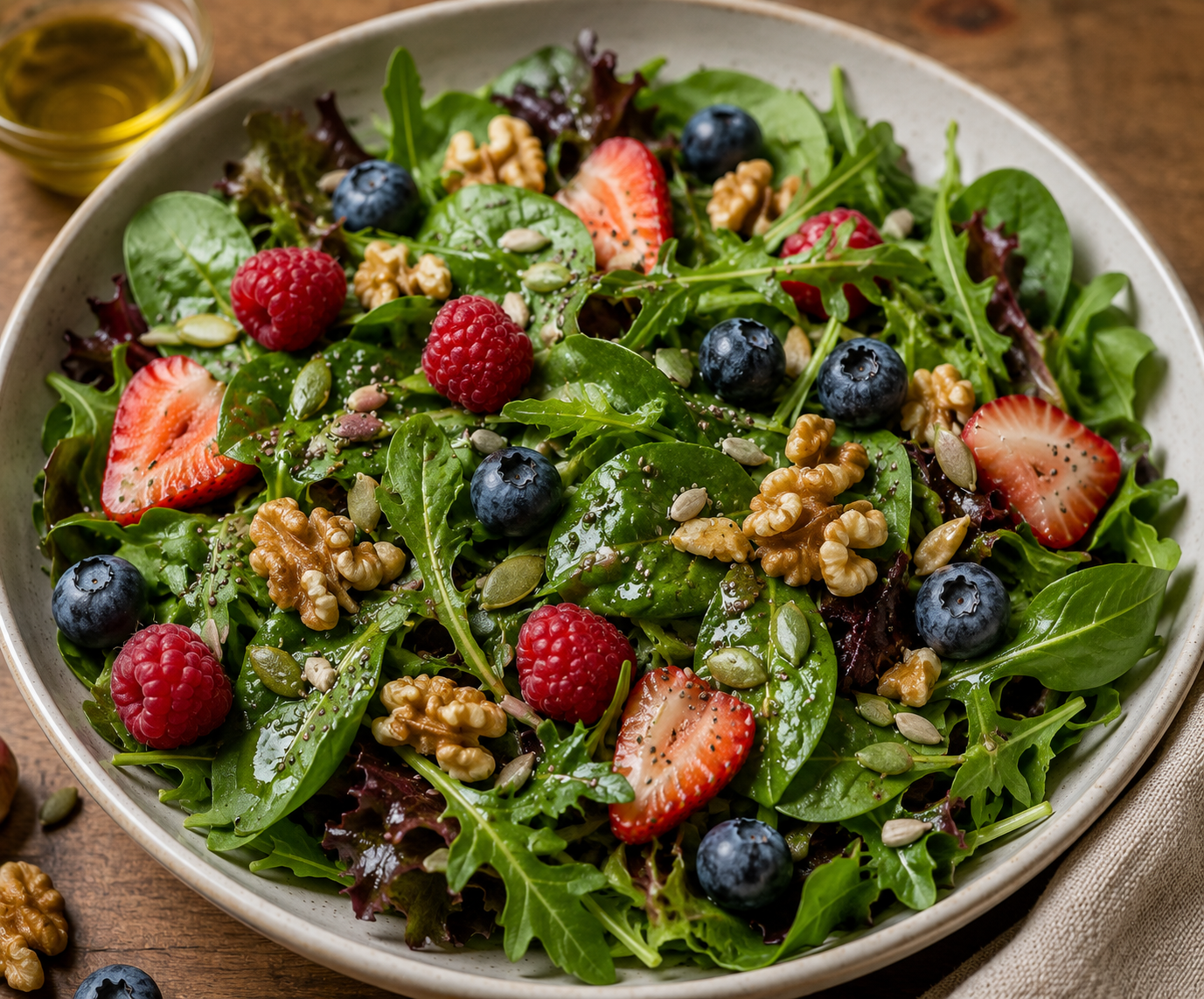
Anti-inflammatory eating does not have to mean warm bowls and cooked meals. The freshest anti-inflammatory ingredients — arugula, leafy greens, beets, pomegranate, walnuts, and raw cruciferous vegetables — perform better uncooked, because heat can reduce the concentration of certain anti-inflammatory compounds. These three salads deliver anti-inflammatory benefits through raw ingredients that retain their full compound profile from farm to plate.
All three are naturally gluten-free, take 10–15 minutes to assemble, and contain ingredients that nutritional science specifically identifies as anti-inflammatory: arugula and leafy greens (isothiocyanates), beets (betalains), walnuts (omega-3 fatty acids and polyphenols), and pomegranate (punicalagins and ellagic acid).
Green Sprouts Salad
| 2.4g
protein |
1.4g
fiber |
$1.00
cost/serving |
10 min
time |
Ingredients
- 3 cups baby spinach
- 1 cup arugula
- 1 cup microgreens of choice
- 1 cup alfalfa sprouts
- 2 teaspoons ground flax seeds
- For the green dressing: 1/2 cup parsley or basil leaves, 1/2 cup dill leaves, 1/4 tsp garlic powder, 1 tbsp lemon juice, 1/4 tsp salt
- Optional: 1 cup raw mango or avocado slices
Instructions
- Soak the greens in vinegar water for 5 minutes, then rinse thoroughly with fresh water and pat dry.
- Arrange the spinach, arugula, and microgreens on serving plates.
- Dry saute the microgreens and sprouts in a frying pan over low heat for 5 minutes. Remove and let cool.
- While the microgreens cool, rinse the herbs for the dressing.
- Combine all dressing ingredients in a blender or food processor and blend until smooth.
- Toss the alfalfa sprouts and sauteed microgreens with the green dressing and flax seeds.
- Add the tossed mixture to the serving plates on top of the base greens.
- Top with mango or avocado slices if using, and serve immediately.
| Tested note:
Arugula is one of the most concentrated sources of isothiocyanates among salad greens — compounds that have shown anti-inflammatory and cancer-protective properties in multiple studies. Its slightly bitter, peppery flavor is the anti-inflammatory compound at work: the same chemicals responsible for the flavor are the ones with the health benefit. The peppery bite that makes arugula distinctive is also what makes it more anti-inflammatory than milder greens like iceberg or romaine. |
Beet Radicchio Summer Salad
| 6g
protein |
7g
fiber |
$1.25
cost/serving |
10 min (plus 8-10 min steaming)
time |
Ingredients
- 2 beets, cubed
- 1 cup radicchio, cubed
- 1 cucumber, cubed
- 1 red bell pepper, cubed
- 1 cup arugula
- 1/4 cup walnuts, chopped
- 1/4 cup pomegranate seeds
- 2 organic hibiscus flowers (optional but visually striking)
- Salt and sweet paprika, to taste
Instructions
- Rinse vegetables and cube them.
- Chop the walnuts.
- Rinse the hibiscus petals and pat dry.
- Steam the beet and radicchio cubes for 8–10 minutes until tender but still firm to the touch. Let cool for 5 minutes.
- Arrange arugula and bell pepper on serving plates.
- Add the steamed beet and radicchio.
- Top with chopped walnuts, pomegranate seeds, and hibiscus petals.
- Sprinkle with salt and sweet paprika.
| Tested note:
Beets contain betalains — the pigments responsible for their deep red color — which are among the most potent natural anti-inflammatory compounds in the vegetable kingdom. Walnuts contribute ALA (alpha-linolenic acid), the plant-based omega-3 fatty acid associated with reduced inflammatory markers. Pomegranate seeds add punicalagins, a class of polyphenols with anti-inflammatory and antioxidant properties. This salad is not just colorful — each component is doing specific anti-inflammatory work. |
| Fun fact:
Hibiscus flowers have been used medicinally across West Africa, the Caribbean, and Southeast Asia for centuries. Modern research has confirmed they contain anthocyanins and organic acids with anti-inflammatory and antihypertensive properties. In Mexico, dried hibiscus flowers make the popular agua de Jamaica; in Egypt and Sudan, they are brewed as karkade tea. |
Green Fruit Salad
| 6g
protein |
6g
fiber |
$1.40
cost/serving |
15 min
time |
Ingredients
- 1 cup baby spinach
- 1 cup Swiss chard, chopped
- 1 yellow bell pepper, sliced
- 1 large onion, sliced
- 2 peaches, sliced into rounds
- 1/4 cup pear-seed butter (or substitute almond butter or tahini)
- 1/4 cup walnuts, chopped
Instructions
- Preheat the oven to 375°F (190°C), or use an air fryer at 350°F.
- Rinse and slice the vegetables and peaches.
- Arrange the peaches, bell pepper, and onion on a wire rack or baking sheet.
- Roast for 8 minutes in the oven (or 5 minutes in the air fryer) until just softened and beginning to caramelize.
- Add rinsed spinach and Swiss chard to serving plates with chopped walnuts.
- Arrange the roasted onion, bell pepper, and peach rounds on top.
- Drizzle with pear-seed butter or your preferred nut butter, and serve.
| Tested note:
Roasting the peaches and bell pepper before adding them to this salad is the step that transforms it from a standard green salad into something genuinely interesting — the heat concentrates their natural sugars and creates a slight caramelization that contrasts with the raw greens underneath. If pear-seed butter is not available, almond butter or tahini works equally well as the dressing base. The walnuts are anti-inflammatory specifically for their omega-3 content — a 1/4 cup serving provides meaningful ALA. |
| From the cookbook:
These three salads are from the Healthy Vegan Cookbook in the full cookbook bundle. For more anti-inflammatory plant-based content see Articles 16 and 21. [Get the cookbook bundle] |