
| 21g
top fiber |
22g
top protein |
Yes
all gluten-free |
All 3
prebiotic-rich |
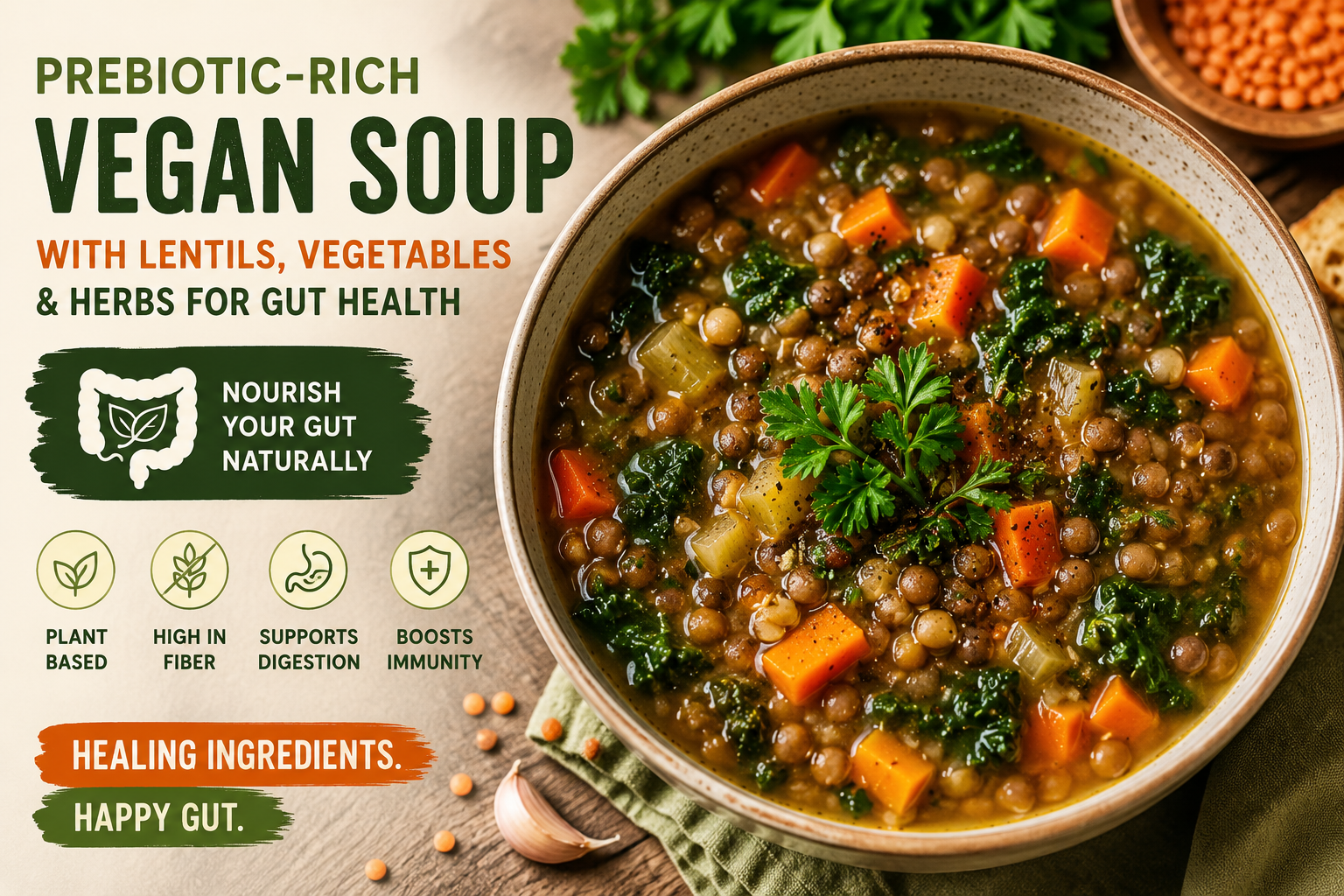
More than half of US consumers now say improving gut health through food is a personal priority. The science behind this shift is solid: the gut microbiome — the ecosystem of bacteria living in your digestive tract — influences digestion, immune function, mood, energy levels, and inflammatory response. The primary dietary input that shapes it is fiber, specifically the prebiotic fiber found in legumes, vegetables, and whole grains.
These three soups and stews are built around the highest-prebiotic plant-based ingredients available: fava beans, lentils, teff, and legume combinations that deliver 10–21 grams of gut-feeding fiber per serving, in forms that are warm, comforting, and genuinely satisfying to eat.
Fava White Bean Soup Meal (Gut Health Focus)
| 22g
protein |
21g
fiber |
$1.40
cost/serving |
50 min (20 with canned)
time |
Ingredients
- 1/2 cup dry cannellini beans (or 1 can, drained)
- 1 cup dry fava beans (or 1 can, drained)
- 1 teaspoon olive oil
- 1 onion, chopped
- 2 cloves garlic, minced
- 4 medium tomatoes, chopped
- 1 medium sweet potato, chopped
- 4 cups vegetable broth
- 1 teaspoon cumin
- 1 teaspoon smoked paprika
- Salt and pepper, to taste
Instructions
- If using dried beans, soak overnight and drain.
- Heat olive oil and saute onion and garlic for 3 minutes.
- Add tomatoes and sweet potato. Cook for 5 minutes.
- Add beans, broth, cumin, and paprika.
- Simmer for 30–40 minutes (15–20 for canned) until beans are completely tender.
- Season and serve.
| Tested note:
Fava beans are among the highest-prebiotic foods available — the type of fiber they contain (resistant starch and oligosaccharides) is specifically what the beneficial bacteria in your gut prefer to eat. Cooking fava beans in the broth allows some of that fiber to leach into the soup liquid, which means even the broth itself is feeding your microbiome. For gut health specifically, don’t discard the broth — it is part of the nutritional benefit. |
Teff Bean Stew
| 14g
protein |
10.5g
fiber |
$1.85
cost/serving |
45 min
time |
Ingredients
- 1/2 cup teff grain
- 1/2 cup dry beans (black, pinto, or kidney)
- 1 onion, chopped
- 2 cloves garlic, minced
- 3 medium tomatoes, chopped
- 1 medium red bell pepper, chopped
- 4 cups water
- 1 teaspoon olive oil
- 1 teaspoon lime juice
- 1–2 teaspoons taco or creole seasoning
- 1 teaspoon salt
- 2 corn tortillas, torn into pieces (added at the end)
Instructions
- Rinse the teff and dry beans thoroughly. Chop the onion, garlic, tomatoes, and bell pepper.
- Heat olive oil in a saucepan over medium heat. Saute the onion and garlic for about 3 minutes.
- Add the tomatoes and bell pepper. Cook for 3 more minutes.
- Stir in the beans, teff, water, salt, and taco or creole seasoning. Mix well.
- Cook for 25–30 minutes, stirring occasionally, until beans and teff are tender. Add water if it becomes too dry.
- Tear the tortillas into pieces and stir in for the last 10 minutes of cooking.
- Finish with lime juice. Top with parsley and serve.
| Tested note:
Teff is an ancient Ethiopian grain with an unusually high resistant starch content — the type of prebiotic fiber that passes through the small intestine undigested and reaches the gut bacteria in the large intestine intact. This makes it significantly more gut-friendly than many other grains. If you have never cooked with teff before, it behaves more like a porridge grain than a rice grain: it absorbs a lot of water and creates a thick, starchy base that is particularly satisfying in a stew format. |
| Fun fact:
Teff has been a staple grain in Ethiopian and Eritrean cuisine for thousands of years, forming the base of injera — the spongy flatbread central to those food cultures. It is one of the smallest grains in the world: it takes approximately 150 teff seeds to equal the weight of one wheat grain. Its small size meant it was easily transported and stored by nomadic communities in the Horn of Africa. |
Cauliflower Lentil Meal (Gut Health Focus)
| 13.5g
protein |
15.1g
fiber |
$1.45
cost/serving |
50 min
time |
Ingredients
- 1/2 cup dry brown or red lentils
- 1 small cabbage head, roughly cut
- 1 can (8 oz) navy beans, drained
- 1 carrot, cubed
- 1 cup okra, diced
- 4 cups water
- 1 can diced tomatoes
- 1 celery stalk, chopped
- 2 cloves garlic, minced
- 1 teaspoon olive oil
- 2 teaspoons garam masala
- 1/2 teaspoon turmeric
- 1/2 teaspoon cayenne
- 1 teaspoon salt
Instructions
- Rinse the lentils. Chop all vegetables.
- Saute celery and garlic in olive oil for 3 minutes.
- Add tomatoes and all other vegetables. Cook for 5 minutes.
- Add lentils, beans, water, and all spices. Mix well.
- Simmer for 20 minutes, adding more water as needed.
- Serve topped with fresh herbs.
| Tested note:
Cabbage is a prebiotic superstar that rarely gets credited for its gut health benefits — it feeds beneficial bacteria including Lactobacillus strains that are associated with better digestive health and reduced inflammation. Cooking it until very soft, as this recipe does, makes it easier to digest while retaining its prebiotic properties. The garam masala in this recipe also contains cardamom and coriander, both of which have traditionally been used as digestive aids. |
The Microbiome Connection: Why These Soups Work
The gut microbiome is shaped by what you eat over weeks and months, not days. A single bowl of fava bean soup won’t transform your gut health — but incorporating these prebiotic-rich meals regularly, two or three times a week, provides the consistent fiber supply that beneficial gut bacteria need to thrive and reproduce. The diversity of fiber sources across these three soups (fava beans, teff, lentils, cabbage, okra) also matters: different bacteria prefer different fiber types, and dietary variety is consistently associated with higher microbiome diversity.
| From the cookbook:
These recipes come from the Healthy Vegan Cookbook in the full cookbook bundle. [Get the cookbook bundle] |