
Cravings are often treated as a problem to fix. Or worse, as a sign of weakness.
But from a physiological perspective, cravings are information.
They are signals, not failures.
When you constantly crave a particular food, your body may be seeking help to overcome some nutritional or emotional imbalance. Your body may be communicating its need for energy, lifestyle changes, or the right foods.
Understanding these signals is far more effective than trying to silence them. This is especially important on a vegan diet, where food choices are often more intentional and eating patterns may shift quickly.
Seeing cravings through a nutritional and emotional lens can reduce guilt and improve balanced eating.
Why Food Cravings Happen in the First Place
Cravings are rarely random. Cravings reflect both physiological and psychological signals. Blood sugar swings, hunger hormones, hydration status, lifestyle, and emotional states all play a role. Many of these mechanisms have been documented in research studies.
They tend to appear when one or more of the following are present:
- Inadequate liquid or energy intake
- Long gaps between meals
- Mineral imbalances
- Low protein or fiber intake
- Blood sugar fluctuations
- Lack of sleep
- Increased physical or mental stress
On a plant-based diet, craving certain foods is not a sign that something is “missing” from the vegan food you eat. They can be a sign that meals need better structure, more variety, or consistency of ingredients.
This is a biological response and ignoring these signals rarely works long-term.
🍞 Craving Carbohydrates?
Carb cravings are one of the most common experiences, especially for people who don’t eat clean, reduce food portions, and intake of fiber-rich carbs.
When energy intake is too low, or your meals are overly sweet, the body compensates by increasing hunger signals to reward itself with carbs.
This is not a lack of willpower. It’s a natural response.
Research shows that irregular eating patterns and blood sugar swings can increase hunger and food cravings, particularly for carbohydrates. That is why balanced meals with fiber and protein often feel more satisfying.
Study link: https://pubmed.ncbi.nlm.nih.gov/21475137/.
On a vegan diet, this often happens when meals focus heavily on vegetables without enough grains, lentils, or beans. Adding sufficient whole-food carbs usually reduces these cravings.
Remember, good carbs are not the enemy. They are the body’s preferred fuel, especially for the muscles and brain.
Zero-nutrient, sugary carbs are the bad guys who can increase your cravings, so keep them off your plate most of the time.
Quinoa Chia Kiwi Pudding
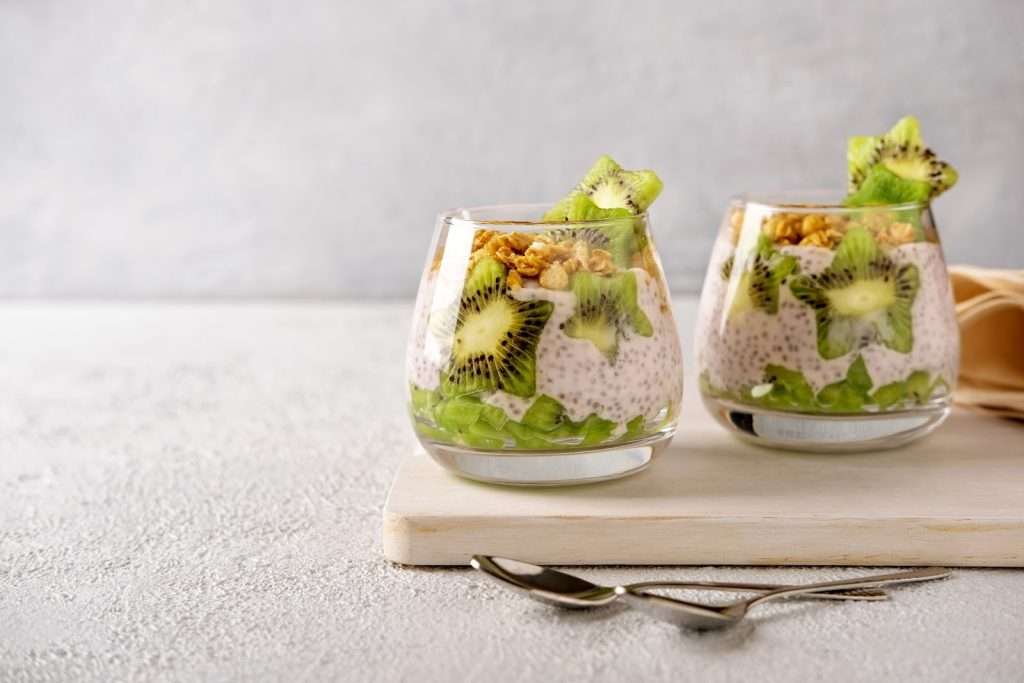
Prep Time 10 mins Cook Time 15 mins 2 servings
Ingredients:
- ½ cup quinoa
- 1 tablespoon chia seeds
- 1 cup water
- 1 cup almond or soy milk.
- 1⁄4 teaspoon salt
- 1⁄4 cup toasted wheat or rice flakes
- 2 kiwifruit sliced
DIrectIons:
- In a saucepan, heat the water and add the quinoa and salt,
- Cook for 15 minutes on low heat.
- Mix in chia seeds and milk, and let it cool.
- In the meantime, toast the wheat flakes in a frying pan on medium for four to five minutes.
- Remove and cool. Slice the kiwis and set aside.
- Fluff up the quinoa chia pudding and add to two or three serving bowls.
- Add the kiwi slices and top with wheat flakes, and serve
🫘 Craving Protein or “Something Hearty”?
Cravings for “something solid,” warm, or savory are often linked to protein or overall meal satisfaction.
Plant proteins work best when paired with carbohydrates and healthy fats. Meals that are too light, such as salads without beans or grain bowls without adequate portions, may look balanced but fail to provide satiety.
The body responds by asking for more food later. Hearty cravings are often a request to build meals that feel complete, and to prevent you from endless snacking.
Studies on protein and appetite show that higher protein intake increases satiety and reduces hunger. That’s why your vegan meals with adequate legumes or tofu feel more filling.
Study Link: https://pubmed.ncbi.nlm.nih.gov/18469287/
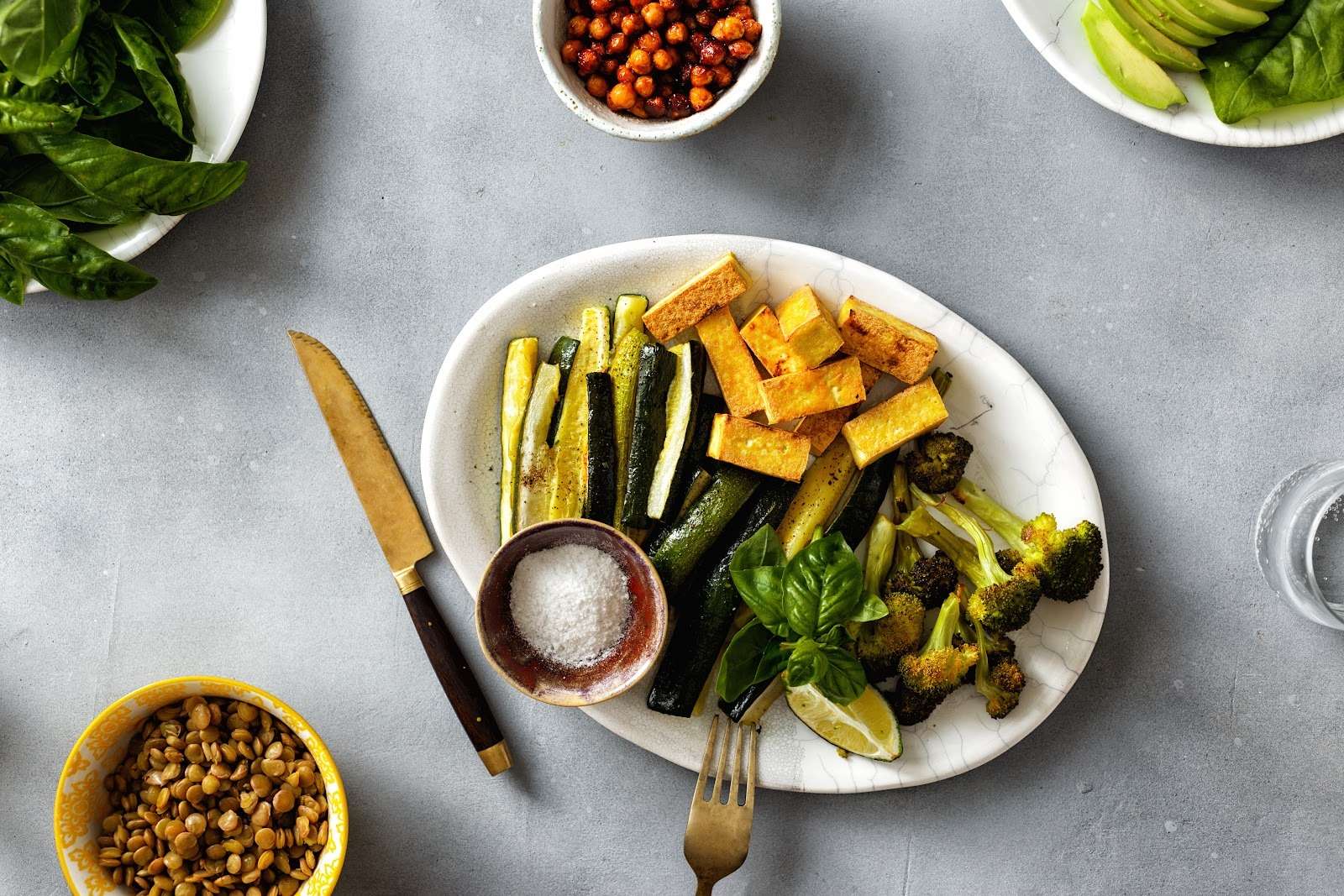
Roasted Veggies with Tofu Cheese
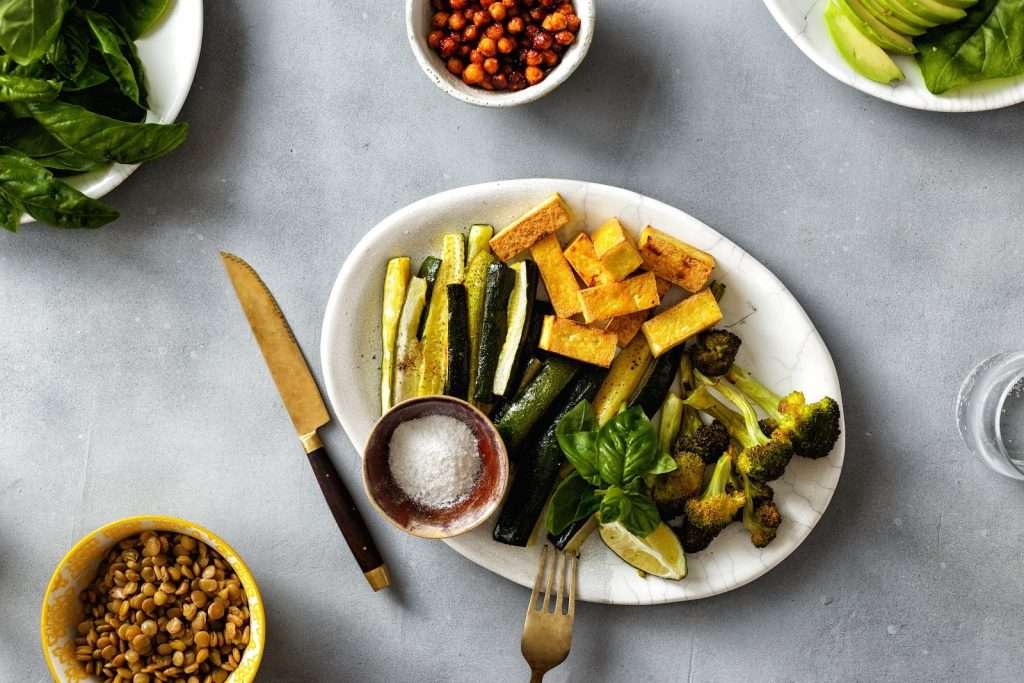
Prep Time 10 mins Cook Time 15 mins 2-3 servings
Ingredients:
- 1 block (8-0z) tofu
- 2 green zucchinis
- 1 large eggplant
- 2 cups broccoli
- 1 small can of lentils
- 2 tablespoons olive oil
- 1 teaspoon turmeric
- 1 teaspoon salt
- 1 teaspoon chili powder
- 1 cup cooked or canned chickpeas
DIrectIons:
- Preheat the oven to 400°F and grease a baking tray
- Cut tofu, eggplant, and zucchini into wedges.
- Drain the lentils and add to a bowl with tofu and veggies.
- Toss with olive oil, salt, and turmeric and arrange in the tray.
- Bake for 15 minutes, until golden brown.
- Remove broccoli, zucchini, and tofu when done.
- Alternatively, grill the vegetables, tofu, and chickpeas on the grill pan on the stovetop for 5 to 7 minutes.
- Add to serving plates with roasted chickpeas.
🧂 Craving Salty Foods?
Your salt cravings can be for varied reasons.
They may arise from:
Low overall calorie intake
High fluid intake without adequate minerals
Increased sweating or heat exposure
Highly salted meals
Whole plant foods contain potassium and magnesium, but sodium still matters, especially in active or warm climates. On a balanced vegan diet, many whole foods are naturally low in sodium. The reverse is true for convenience foodsthat are highly seasoned, and this can play an important role in your craving for more sodium in your diet
Study link: https://pmc.ncbi.nlm.nih.gov/articles/PMC2491403/
Listening to salt cravings often leads to better eating patterns.
🍫 Sweet Cravings and Emotional Factors
Not all cravings are purely nutritional.
Sweet cravings, in particular, can be linked to:
- Stress
- Fatigue
- Poor sleep
- Emotional needs
Food is not just fuel. It is also sensory and emotional. Attempting to eliminate emotional eating often backfires. Research shows that avoiding certain foods can lead to cravings.
https://pmc.ncbi.nlm.nih.gov/articles/PMC7399671
Ensuring meals are nourishing, regular, and satisfying tends to soften emotional cravings over time, and you do this without following strict rules.
🌿 Is Cravings the Same as Emotional Eating?
Most cravings are not nutritional. Some come from how you live.
Lifestyle-Driven Cravings
The brain is excellent at building associations. If certain foods are regularly eaten in specific situations, like popcorn during movies or sweets during late-night work, the brain begins to expect them. Over time, the situation triggers a craving, even without physical hunger.
Mood also plays a role. During periods of stress, loneliness, or fatigue, the body often seeks familiar foods that feel comforting or grounding. These cravings aren’t a sign of poor discipline but a response to emotional load.
Stress amplifies this effect. When life feels overwhelming, cravings tend to increase, especially for foods that are quick, warm, or emotionally familiar.
Sleep matters too. Poor or inconsistent sleep can disrupt appetite rhythms, making cravings more frequent and harder to interpret the next day.
Understanding lifestyle-driven cravings helps separate habit and context from real nutritional needs. You can make better food choices
⏰ Timing Matters More Than Perfection
One of the most overlooked causes of cravings is irregular eating.
Skipping meals, delaying food, or waiting too long between meals can trigger strong hunger signals later in the day. These signals are often mislabeled as “cravings.”
Regular meals, even simple ones, help regulate appetite hormones and reduce the intensity of food urges.
Consistency reduces the constant need for certain groups of foods and stops you from reaching for that bowl of chips.
🌿 Responding to Cravings Without Judgment
Cravings don’t need to be controlled or ignored.
They need to be understood.
Instead of asking, “Why am I craving this?”
Try asking, “What might my body need right now?”
Often, the answer is nourishment, lifestyle factors or mental stress.
🌱 A More Supportive Way to Eat
When meals are balanced, regular, and satisfying, cravings tend to soften over time. Not because they were suppressed, but because the body felt supported.
This is how a vegan diet becomes sustainable.
Cravings are a form of feedback.
Wellness doesn’t come from fighting your body.
It comes from listening to it and understanding the message.
Looking for nourishing vegan meals that feel comforting and easy to enjoy as your routines change?The Vegan Seniors Cookbooks focus on simple, warm, balanced meals designed for ease, digestion, and everyday nourishment